

Total: Rs. 0.00
Taxes and shipping calculated at checkout

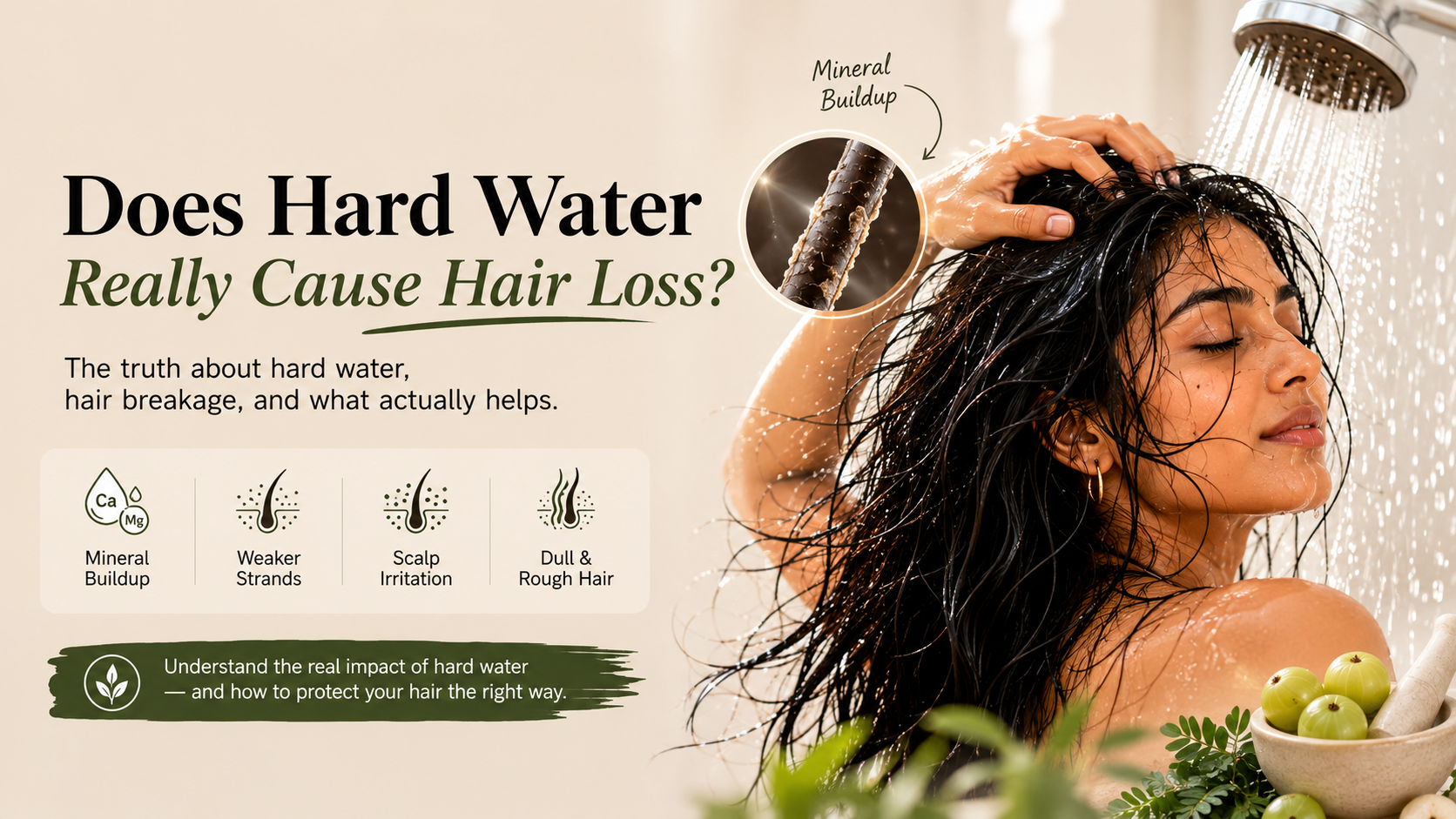
Hard water doesn't directly cause hair to fall out, but it does weaken hair over time leaving mineral buildup on the scalp and hair shaft that makes strands more brittle, harder to clean, and more prone to breakage. In regions with high mineral content in tap water, this buildup effect can look and feel like hairfall, even though the root cause is water quality, not the hair follicle itself.
If you've noticed your hair feeling rougher, your shampoo not lathering the way it used to, or more strands in your hairbrush since moving to a new city or switching water sources hard water is worth ruling out before assuming something's wrong with your hair itself.
Water is classified as "hard" when it carries a high concentration of dissolved minerals mainly calcium and magnesium picked up as it passes through soil and rock before reaching your tap. This is extremely common across large parts of North India, where groundwater naturally carries higher mineral content than water in many other regions.
When you wash your hair with hard water, these minerals don't rinse away cleanly. Instead, they bind to the hair shaft and scalp, forming a thin but persistent layer of mineral buildup. Over weeks and months, this buildup:
None of this means your hair is falling out at the root. It means the hair that's already there is under more physical stress than it should be and over time, that stress shows up as more visible shedding and breakage.
Hard water damage tends to build gradually, so it's easy to miss until it's fairly advanced. Common signs include:
Dull, rough texture despite washing. If your hair feels straw-like or looks lifeless right after a wash not before mineral buildup is a likely culprit.
Shampoo that won't lather properly. Hard water reacts with many shampoo formulas, especially sulfate-based ones, reducing lather and leaving residue behind instead of rinsing clean.
Increased breakage and split ends. Brittle, mineral-coated strands are more prone to snapping, especially during brushing or tying up wet hair.
A tight or flaky scalp after washing. Mineral buildup on the scalp can disrupt its natural balance, leading to a sensation of tightness or visible flaking that's sometimes mistaken for dandruff.
Hair color fading faster than expected. If you color your hair, hard water can strip color faster than normal, since the mineral layer interferes with how pigment sits in the hair shaft.
If two or more of these sound familiar especially if they started after a move or a change in your water source hard water is worth addressing directly, rather than just switching between shampoos hoping one works better.
It's worth being honest here: hard water is rarely the only cause of significant hairfall. Genetics, hormonal changes, stress, nutritional gaps, and underlying scalp conditions all play a role in hair loss, and none of those are things a shampoo — however well-formulated can fully address on their own.
What hard water does is act as a compounding stressor. If you're already prone to hairfall for other reasons, hard water buildup adds extra physical strain on hair that's already vulnerable, making shedding more noticeable than it might otherwise be. If you're experiencing sudden, significant, or patchy hair loss, that's worth discussing with a dermatologist rather than attributing to water quality alone. But if your main concerns are texture, breakage, and everyday shedding that's crept up gradually, hard water is a very reasonable place to start looking.
The good news is that hard water damage is one of the more manageable hair stressors, because you can address it directly rather than guessing:
Use a clarifying or chelating shampoo periodically. These are formulated specifically to lift mineral deposits that regular shampoos leave behind. Using one every 1-2 weeks not daily, since they can be drying with overuse helps reset the buildup.
Consider a filtered showerhead if hard water is a persistent issue in your area. This addresses the problem at the source rather than just managing the aftermath.
Look for ayurvedic ingredients known to support scalp and hair strength against everyday mineral and environmental stress. Ingredients like bhringraj and amla have long been used in Indian hair care traditions for their scalp-nourishing and strengthening properties, and they pair well with a hard-water-conscious routine supporting hair health from the inside of the routine, not just stripping buildup from the outside.
Be gentle with wet hair. Wet hair is more fragile even without hard water involved, and mineral-coated strands are more fragile still. Detangle carefully, and avoid tight ties or vigorous towel-drying right after washing.
If you're in a hard water region and dealing with ongoing hairfall, texture changes, or scalp discomfort, an ayurvedic shampoo formulated with hard-water conditions in mind rather than a generic anti-hairfall formula addresses the specific mechanism at play, rather than treating symptoms in isolation.
Does hard water cause hair loss? Not directly hard water doesn't attack the hair follicle. But it does cause mineral buildup that weakens and roughens hair, making breakage and shedding more noticeable over time.
Is hard water bad for hair? Yes, over time. While an occasional wash with hard water won't cause lasting damage, consistent exposure leads to buildup that affects texture, shine, and hair strength.
Can hard water cause hair loss permanently? Hard water itself doesn't cause permanent follicle damage the way some medical conditions can. Once buildup is addressed — through clarifying treatments and a hard-water-conscious routine — hair typically recovers its texture and strength over a few weeks to months.


There is nothing in your cart lets add some items.


Subtotal ₹0.00
Shipping Charges Calculated on checkout


